

The Connection Between Rail Elastomers and Track Maintenance Efficiency
Nov 16,2025
The Connection Between Rail Elastomers and Track Maintenance Efficiency Table of Contents Introduction to Rail Elastomers Understanding Rail Elastomers: Properties and Types The Role of Rail Elastomers in Track Maintenance Benefits of Using Rail Elastomers in Track Maintenance Applications of Rail Elastomers in Rail Systems Challenges and Solutions in Rail Track Maintenanc
The Connection Between Rail Elastomers and Track Maintenance Efficiency
Table of Contents
- Introduction to Rail Elastomers
- Understanding Rail Elastomers: Properties and Types
- The Role of Rail Elastomers in Track Maintenance
- Benefits of Using Rail Elastomers in Track Maintenance
- Applications of Rail Elastomers in Rail Systems
- Challenges and Solutions in Rail Track Maintenance
- The Future of Rail Elastomers in Transportation
- Frequently Asked Questions (FAQs)
- Conclusion
Introduction to Rail Elastomers
In the realm of rail transport, efficiency and safety are paramount. One of the critical components that significantly influence these factors is **rail elastomers**. These versatile materials play a vital role in the design and maintenance of rail systems, contributing to enhanced operational performance. This article explores the connection between rail elastomers and track maintenance efficiency, shedding light on their properties, benefits, and applications.
Understanding Rail Elastomers: Properties and Types
Elastomers are unique materials characterized by their elasticity and flexibility, making them ideal for various applications in rail transport. There are several types of elastomers used in rail systems, including:
Natural Rubber
Natural rubber, derived from latex, is known for its excellent resilience and durability. It is commonly used in rail pads and dampers, offering effective vibration dampening.
Synthetic Rubber
Synthetic rubber, such as EPDM (Ethylene Propylene Diene Monomer) and SBR (Styrene-Butadiene Rubber), is engineered to provide superior weather resistance and durability, ideal for outdoor rail applications.
Characteristics of Rail Elastomers
Some key properties that define rail elastomers include:
- **High elasticity**: Allowing them to absorb shocks and vibrations.
- **Excellent fatigue resistance**: Ensuring longevity under repetitive stress.
- **Chemical resistance**: Making them suitable for various environmental conditions.
- **Thermal stability**: Ensuring performance in diverse temperature ranges.
The Role of Rail Elastomers in Track Maintenance
Rail elastomers play a pivotal role in track maintenance by providing various functions that enhance the performance and lifespan of rail infrastructure. Their applications can be broken down into several key areas:
Vibration Damping
Elastomers effectively absorb vibrations generated by moving trains, reducing the transmission of these vibrations to the track structure. This damping capability helps prevent track deformation and prolongs the lifespan of rail components.
Load Distribution
Rail elastomers, when used in pads or bearings, assist in evenly distributing the load exerted by trains. This function not only protects the track but also minimizes wear and tear on both the rail and the underlying infrastructure.
Noise Reduction
In urban areas, noise pollution from rail systems is a significant concern. Rail elastomers contribute to noise reduction by dampening sound vibrations, resulting in a quieter travel experience for passengers and reduced disturbance for nearby communities.
Benefits of Using Rail Elastomers in Track Maintenance
Incorporating rail elastomers into track maintenance strategies offers numerous benefits that contribute to overall operational efficiency.
Cost-Effectiveness
By enhancing the durability and longevity of track components, rail elastomers reduce the frequency and costs associated with maintenance and repairs. This leads to more efficient allocation of resources over time.
Increased Safety
The use of rail elastomers minimizes track deformation and enhances stability, leading to safer train operations. Improved safety measures result in fewer accidents and incidents, thus enhancing public confidence in rail transport.
Environmental Impact
Rail elastomers are often more sustainable compared to traditional materials. Their durability leads to less waste and a reduced carbon footprint associated with manufacturing, transportation, and disposal.
Improved Performance
With their ability to absorb shocks and distribute loads, rail elastomers enhance the overall performance of rail systems. This translates into smoother rides for passengers and more efficient freight transport.
Applications of Rail Elastomers in Rail Systems
The versatility of rail elastomers allows for various applications in rail systems, including:
Rail Pads
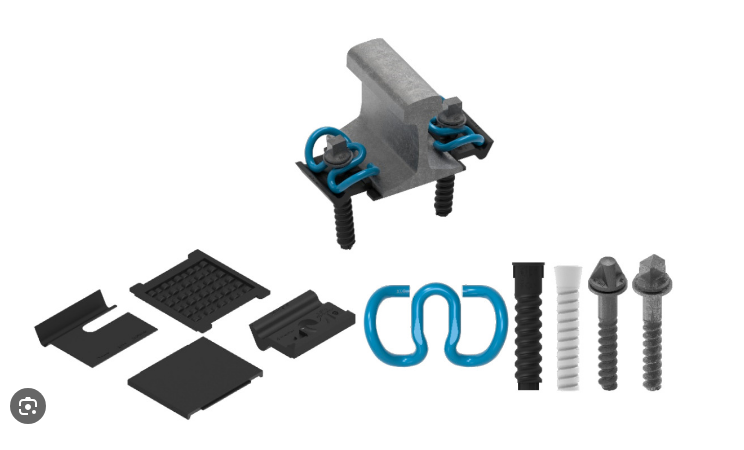
Rail pads made from elastomers are placed between the rail and the sleeper. They provide cushioning, vibration absorption, and noise reduction, ensuring a smoother and quieter ride.
Track Dampers
Track dampers utilize elastomeric materials to mitigate vibrations along the track. By reducing vibration transmission, these dampers protect the integrity of the track and enhance comfort for passengers.
Bearing Systems
Elastomeric bearings are employed to provide flexible connections in rail bridges and structures. They allow for movement while supporting the weight of trains without compromising structural integrity.
Challenges and Solutions in Rail Track Maintenance
While rail elastomers offer numerous advantages, challenges in their implementation and maintenance exist. Addressing these challenges is crucial for optimal track performance.
Degradation Over Time
One significant challenge is the potential for degradation of elastomers due to environmental factors such as UV exposure, temperature fluctuations, and moisture. Regular inspections and selecting high-quality materials can mitigate this issue.
Cost of Replacement
While elastomers can enhance longevity, eventual replacement is inevitable. Budgeting for scheduled maintenance and using predictive maintenance technologies can help manage costs effectively.
The Future of Rail Elastomers in Transportation
As rail transport continues to evolve, the future of rail elastomers looks promising. Innovations in material science and engineering are leading to the development of advanced elastomers that offer even greater benefits.
Smart Elastomers
Emerging technologies are paving the way for **smart elastomers** that can monitor their own condition in real time. These materials could provide alerts when maintenance is needed, further increasing efficiency and safety.
Recycling and Sustainability
With a growing emphasis on sustainability, the recycling of rail elastomers is becoming more prevalent. Developing methods to recycle and reuse elastomeric materials will not only reduce waste but also create a circular economy in rail transport.
Frequently Asked Questions (FAQs)
1. What are rail elastomers made of?
Rail elastomers are typically made from natural or synthetic rubber compounds designed to provide flexibility, durability, and resistance to environmental factors.
2. How do rail elastomers improve safety?
By minimizing track deformation and providing vibration damping, rail elastomers help maintain track stability, reducing the risk of accidents and enhancing safety for both passengers and freight.
3. What is the lifespan of rail elastomers?
The lifespan of rail elastomers can vary based on environmental conditions and usage, but with proper maintenance, they can last for several years, significantly reducing the need for frequent replacements.
4. How does vibration damping benefit rail systems?
Vibration damping reduces wear and tear on rail components, leading to a smoother ride, decreased maintenance costs, and improved passenger comfort.
5. Are there any innovations in rail elastomer technology?
Yes, ongoing research is leading to the development of smart elastomers that can monitor their own condition, as well as advances in materials that enhance performance and sustainability.
Conclusion
The connection between **rail elastomers** and **track maintenance efficiency** is undeniable. By leveraging the unique properties of elastomers, rail systems can achieve improved safety, reduced costs, and enhanced performance. As technology advances, the future of rail elastomers holds the promise of even greater innovations that will drive the rail transport industry towards a more efficient and sustainable future.
Previous:
Recommended

Xinda Introduces KB65 Railway Tie Plate – Now Available for Customer Orders
Xinda Railway Equipment Co., Ltd. has added the KB65 railway tie plate (baseplate) to its product portfolio, expanding the company's offering for customers operating under GOST standards.
Xinda Optimizes KB65 Railway Tie Plate – New Samples Available for Customer Testing
Xinda Railway Equipment Co., Ltd. has completed a new round of optimization for its KB65 railway tie plate, a key component used in railway fastening systems.
Contact Us
Henan Xinda Railway Equipment Co., Ltd
Fax: +86-372-2372333
Email:info@xindarail.com
WeChat:XindaRail






Send us your request
we will get in touch with you as soon as possible