

How Rail Elastomers Revolutionize the Design of Train Tracks
Apr 11,2026
How Rail Elastomers Revolutionize the Design of Train Tracks Table of Contents 1. Introduction to Rail Elastomers 2. The Role of Elastomers in Railway Infrastructure 3. Key Advantages of Rail Elastomers 4. Applications of Rail Elastomers in Train Track Design 5. Comparing Rail Elastomers with Traditional Materials 6. Challenges in the Adoption of Rail Elastomers 7. The Future of Rail Elastomers in
How Rail Elastomers Revolutionize the Design of Train Tracks
Table of Contents
1. Introduction to Rail Elastomers
2. The Role of Elastomers in Railway Infrastructure
3. Key Advantages of Rail Elastomers
4. Applications of Rail Elastomers in Train Track Design
5. Comparing Rail Elastomers with Traditional Materials
6. Challenges in the Adoption of Rail Elastomers
7. The Future of Rail Elastomers in Rail Transport
8. Conclusion
9. FAQs
1. Introduction to Rail Elastomers
Rail elastomers are advanced polymer materials designed to significantly improve the performance and longevity of railway systems. These materials possess unique properties that contribute to a safer, more efficient, and sustainable rail transport infrastructure. As the demand for robust railway solutions continues to grow, rail elastomers emerge as a pivotal innovation in addressing various challenges faced by train operators and infrastructure managers.
2. The Role of Elastomers in Railway Infrastructure
Elastomers play a crucial role in railway infrastructure by serving as a cushioning and vibration-dampening agent within the track system. These materials are designed to absorb shock and minimize vibrations caused by moving trains, thereby enhancing passenger comfort and prolonging the lifespan of rail components. Additionally, the incorporation of rail elastomers into track design leads to a reduction in maintenance costs and downtime, ultimately optimizing operational efficiency.
Understanding the Composition of Rail Elastomers
Rail elastomers are typically composed of a blend of natural and synthetic rubber variants, reinforced with additives to enhance their durability and performance. The unique characteristics of these materials, such as flexibility, resilience, and resistance to environmental factors, allow them to effectively withstand the demanding conditions of railway environments.
3. Key Advantages of Rail Elastomers
The adoption of rail elastomers in train track design offers numerous advantages:
Enhanced Vibration Damping
One of the primary benefits of rail elastomers is their superior ability to dampen vibrations. By absorbing and dissipating energy from train movements, these materials reduce the transmission of vibrations to the surrounding environment, minimizing noise pollution and improving passenger comfort.
Improved Track Stability
Rail elastomers enhance the stability of train tracks, ensuring that rails remain securely in place during operation. This stability contributes to a smoother ride for passengers and minimizes the risk of derailments caused by shifting tracks.
Increased Longevity and Durability
Rail elastomers are designed to withstand harsh environmental conditions, including extreme temperatures and moisture exposure. Their durability allows railway systems to operate effectively with reduced maintenance needs, extending the lifespan of track components.
Cost-Effectiveness
Although the initial investment in rail elastomers may be higher than traditional materials, the long-term savings in maintenance and operational costs make them a cost-effective choice. By reducing wear and tear on tracks and other components, rail elastomers contribute to significant financial savings over time.
4. Applications of Rail Elastomers in Train Track Design
Rail elastomers find diverse applications within the railway sector, making them integral to modern train track design.
Rail Fasteners and Sleepers
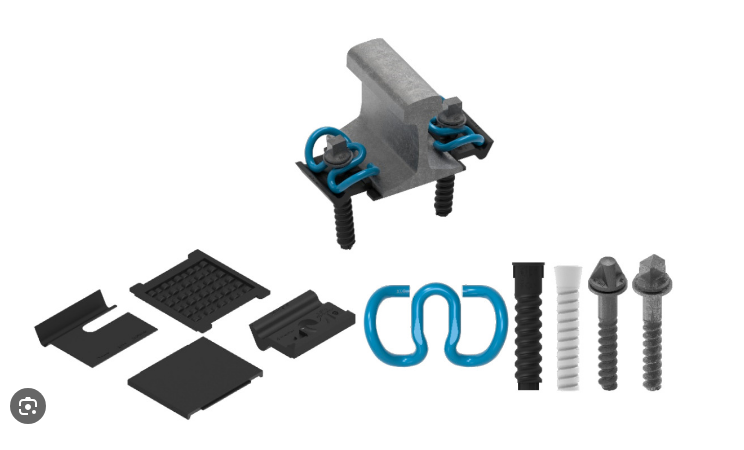
Rail fasteners and sleepers made from rail elastomers provide effective cushioning and support for the rails. This enhances the overall stability of the track and ensures that the train travels smoothly, minimizing wear on wheels and rails alike.
Ballast Mats
Rail elastomers are also utilized in ballast mats, which are installed beneath the track to provide additional stability and vibration dampening. These mats help distribute loads evenly and protect the underlying infrastructure from the adverse effects of vibrations.
Noise Barriers
In urban areas, rail elastomers are increasingly used in noise barrier applications. These barriers effectively absorb sound waves generated by passing trains, providing a quieter environment for nearby residents.
5. Comparing Rail Elastomers with Traditional Materials
When comparing rail elastomers to traditional materials such as concrete and steel, several key differences emerge:
Weight and Flexibility
Rail elastomers are significantly lighter than their traditional counterparts, making them easier to handle during installation and maintenance. Their flexibility allows for better adaptation to uneven surfaces and variations in track alignment.
Environmental Impact
Rail elastomers are often more environmentally friendly than traditional materials. Being composed of sustainable materials, they can reduce the carbon footprint associated with railway construction and maintenance.
Performance Under Stress
Traditional materials may crack or degrade under extreme stress and environmental conditions. In contrast, rail elastomers maintain their integrity and performance, ensuring safer and more reliable rail operations.
6. Challenges in the Adoption of Rail Elastomers
Despite their advantages, the adoption of rail elastomers is not without challenges.
Initial Costs
The initial investment required for rail elastomers can be a barrier for some railway operators. However, the long-term benefits often outweigh the upfront costs.
Technical Expertise
Implementing rail elastomers requires specialized knowledge and expertise. Training and knowledge transfer are essential for ensuring successful integration into existing systems.
7. The Future of Rail Elastomers in Rail Transport
As the demand for efficient and sustainable rail transport solutions grows, the future of rail elastomers appears promising.
Innovative Developments
Ongoing research and development are focused on enhancing the properties of rail elastomers. Innovations in formulations and processing techniques are expected to yield even more robust and efficient materials.
Sustainability Initiatives
With an increased emphasis on sustainability in the transportation sector, rail elastomers are likely to play a vital role in developing eco-friendly railway solutions. Their potential for recycling and reduced environmental impact aligns with global sustainability goals.
8. Conclusion
Rail elastomers represent a transformative innovation in the design and functionality of train tracks. By offering enhanced vibration dampening, improved stability, and increased durability, these materials are revolutionizing the railway industry. As we continue to explore the potential of rail elastomers, their integration into railway infrastructure will play a critical role in shaping the future of rail transport, paving the way for safer, more efficient, and environmentally sustainable rail systems.
9. FAQs
What are rail elastomers?
Rail elastomers are advanced polymer materials used in railway systems to enhance performance, longevity, and comfort through vibration dampening and shock absorption.
How do rail elastomers improve train track design?
Rail elastomers improve train track design by providing better stability, reducing vibrations, and increasing the durability of track components, ultimately leading to enhanced passenger comfort and safety.
Are rail elastomers environmentally friendly?
Yes, rail elastomers are often composed of sustainable materials and can contribute to reduced environmental impact in railway construction and maintenance.
What are the challenges in adopting rail elastomers?
Challenges include initial costs and the need for specialized technical expertise for proper implementation.
What is the future of rail elastomers in the railway industry?
The future looks promising with ongoing innovations and increased focus on sustainability, making rail elastomers a critical component of modern railway infrastructure.
Previous:
Recommended

Xinda Railway Equipment Is Producing Elastic Rail Clips for Railway Projects
Recently, Xinda Railway Equipment Co., Ltd. is carrying out the production of a new batch of elastic rail clips for overseas railway projects. As a professional rail clip manufacturer and railway fasteners supplier, the company continues to provide reliable products for global railway construction and maintenance. With the steady growth of railway infrastructure investment, the demand for high-quality railway fastening system components such as rail clips, fishplates, and bolts is increasing. In order to meet customer requirements, our factory has arranged continuous production to ensure timely delivery.
Henan Xinda Railway Equipment Co., Ltd. participated in the Russian International Railway and Rail Transit Exhibition
Contact Us
Henan Xinda Railway Equipment Co., Ltd
Fax: +86-372-2372333
Email:info@xindarail.com
WeChat:XindaRail






Send us your request
we will get in touch with you as soon as possible