

RAIL PAD – ELASTIC RAIL SEAT PAD FOR TRACK VIBRATION DAMPING
Jul 06,2026
Rubber, EVA and composite rail pads for all sleeper types – high resilience, low stiffness, long service life.
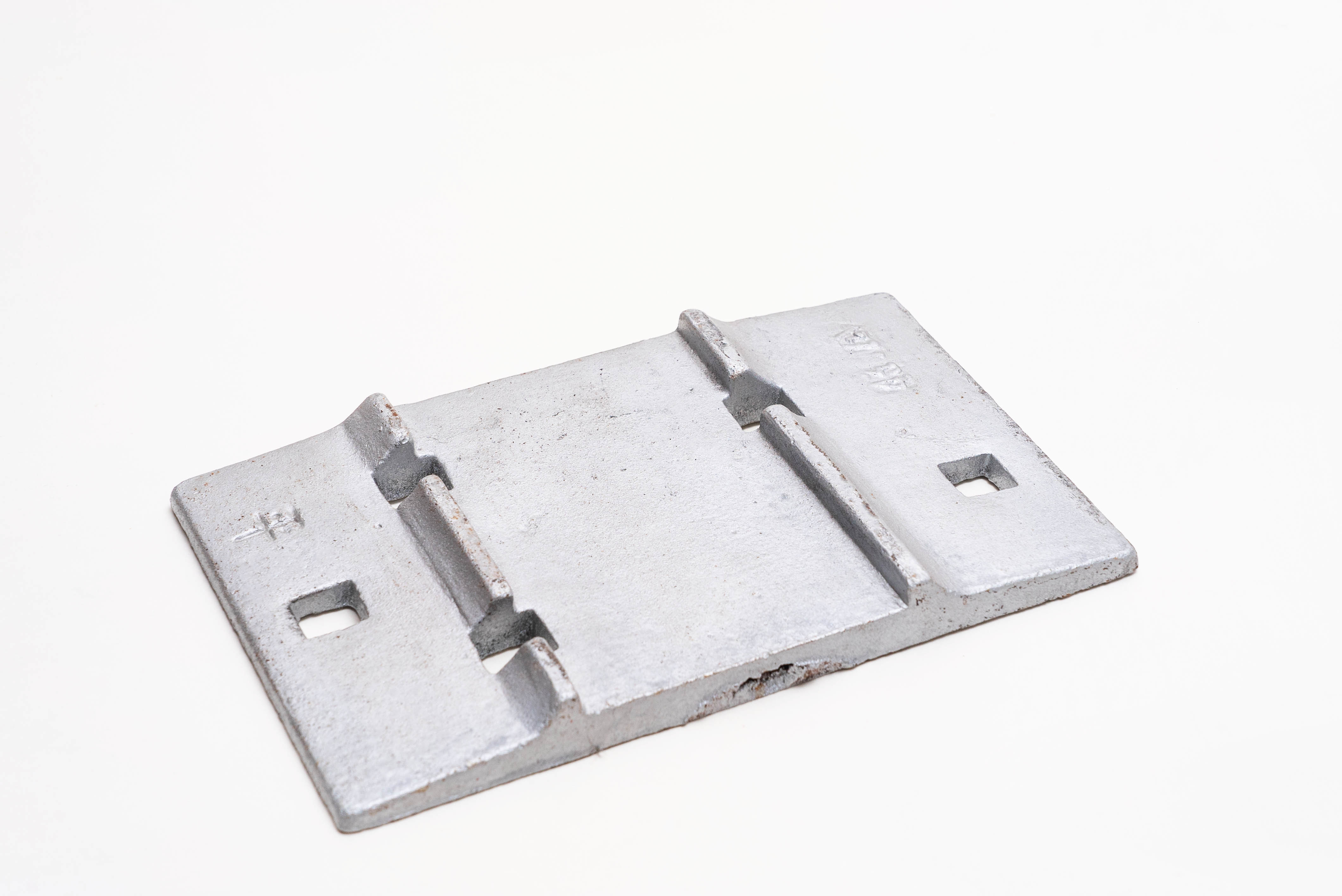
The rail pad sits between the rail foot and the sleeper or baseplate. It distributes the wheel load from the rail to the sleeper, absorbs impact and vibration, and protects the sleeper surface from wear and cracking. As part of the rail fastening system, the pad also contributes to maintaining the overall clip clamping force by setting the correct deflection path. Our pads are available in a range of materials – natural rubber, EVA (ethylene vinyl acetate), TPE (thermoplastic elastomer) and composite combinations – with stiffness values matched to the track category. They are cut or moulded to suit specific rail profiles and sleeper designs, and can be supplied plain or with bonded fabric reinforcement. A good elastic rail pad reduces ballast degradation, lowers noise, and extends the life of both the track fasteners and the sleeper.
KEY FEATURES & BENEFITS
Controlled stiffness and resilience: Each railway pad is designed to a specified static and dynamic stiffness range, measured in kN/mm. This ensures the rail fastening system keeps the rail at the correct height and deflection under load, while still providing enough cushioning.
Wear and abrasion resistance: The pad material resists fretting and abrasion under repeated rail movement, especially important on curves, steep grades, and heavy-haul lines. Long-wearing pads mean less frequent replacement during railway maintenance cycles.
Attenuation of vibration and noise: By inserting an elastic layer between the rail and the sleeper, these track pads reduce structure-borne vibration. This is a critical factor for metro, high-speed, and urban lines near sensitive buildings.
Compatibility with different sleepers: We supply pads for prestressed concrete monoblock, twin-block, wooden, and composite sleepers. Pads can include a ribbed or studded underside to locate securely in the sleeper seat.
Weather and chemical stability: Pad compounds are formulated to withstand ozone, UV, moisture and oils commonly found on track. This keeps the elastic rail pad performing over a wide temperature range without hardening or cracking.
TECHNICAL SPECIFICATIONS
| Parameter | Specification |
|---|---|
| Material | Natural rubber (NR), EVA, TPE, NR/SBR blend, or customer-specified compound |
| Pad type | Flat, grooved, studded, fabric-backed, or with bonded metal insert if required |
| Hardness | 65–85 Shore A (typical for rubber pads); EVA pads based on density |
| Static stiffness | 30–100 kN/mm (can be tuned to project requirement) |
| Dynamic stiffness ratio | 1.2–1.8 (depends on material and preload) |
| Thickness | 4–10 mm (standard), other thicknesses on request |
| Rail sections | UIC 54, UIC 60, 115RE, 136RE, 50kg/m, JIS 50N, and others |
| Sleeper type | Prestressed concrete, two-block, timber, steel, composite |
| Temperature range | -30 °C to +70 °C (material dependent) |
| Standards | EN 16730, AREMA Chapter 30, UIC 864-5, TB/T 3395 (relevant parts) |
Previous:
Recommended

Xinda Introduces KB65 Railway Tie Plate – Now Available for Customer Orders
Xinda Railway Equipment Co., Ltd. has added the KB65 railway tie plate (baseplate) to its product portfolio, expanding the company's offering for customers operating under GOST standards.
Xinda Optimizes KB65 Railway Tie Plate – New Samples Available for Customer Testing
Xinda Railway Equipment Co., Ltd. has completed a new round of optimization for its KB65 railway tie plate, a key component used in railway fastening systems.
Contact Us
Henan Xinda Railway Equipment Co., Ltd
Fax: +86-372-2372333
Email:info@xindarail.com
WeChat:XindaRail






Send us your request
we will get in touch with you as soon as possible